
Earlier threat awareness
Earlier awareness of threat development and wind-shift detection, built from official feeds and field sensing with provenance attached.
Ember Shield is a human-commanded, autonomy-enabled wildfire operating architecture that connects incident command, crews, sensing, communications, aerial assets and ground systems into one governed operational picture.
Those are national totals. The operational pattern underneath them repeats incident by incident: crews withdraw when conditions exceed survivable limits, aircraft ground in extreme wind, and incident command loses visibility when smoke, terrain and degraded communications fracture the operating picture.
The fire does not pause during that window. Ember Shield is built to hold governed awareness and coordination through it. Not to replace crews, and not to make decisions that belong to incident command.
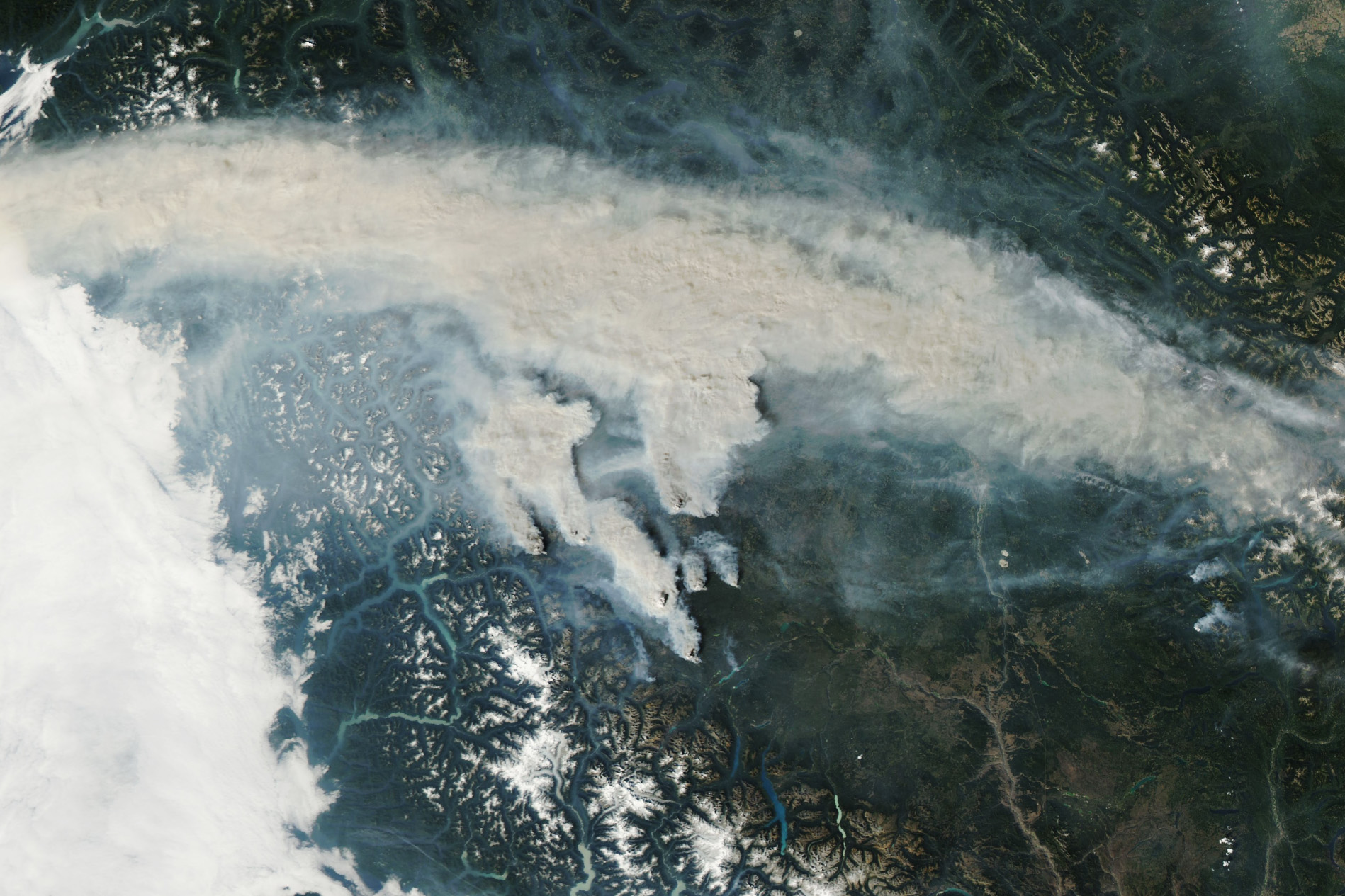
Earlier awareness of threat development and wind-shift detection, built from official feeds and field sensing with provenance attached.
Crew location, route awareness and withdrawal support presented to incident command, under incident-command authority.
Continuous operational visibility through smoke, terrain, distance and communications degradation.
Governed coordination of aerial and ground assets inside limits humans set.
Suppression support, medical delivery, logistics, search and rescue, and controlled evacuation support.
Support for the protection of remote communities, critical infrastructure and the wildland-urban interface.
Product names are secondary to what the operation actually needs. Development status is labelled on every component.
Overwatch, official government data feeds, weather and wind information, remote sensing and field sensors.
Terra-Node, approved communications partners and multi-transport continuity.
A.V.A., Nexus and incident-command interfaces operating within human-set authority.
AEGIS, Mule or partner-provided UAS and UGV systems.
CATS crew awareness, medical and logistics support, and evacuation support. RHINO is a later heavy engineering and evacuation pathway.
Ember Shield multiplies what incident command can reach. Authority, judgment and tactical decisions stay with the people who already hold them.
The system can describe risk awareness and support. It does not issue safety guarantees. Evacuation and public-safety decisions come from the responsible authorities, and you should follow them.
If a feed is stale, unavailable or degraded, the system says so. Old information is never presented as current.
Where official agency information is used, source provenance and unaltered official wording are preserved rather than paraphrased into something that sounds more certain.
A 2027 pilot is a structured engagement. Scope, engineering validation, safety testing, operator requirements, airspace permissions and regulatory approvals are worked through with you before anything flies, because that is what makes a wildfire pilot succeed rather than stall.
This form is for opening a conversation only. Please do not include sensitive, operational or protected information in it.